Dipendra Tamang
Canine Behaviour & Training
FORCE-FREE DOG TRAINING & BEHAVIOUR SUPPORT
IN CANBERRA AND ONLINE
Practical support for real life. From puppy foundations and everyday manners to reactivity, recall, rescue dog adjustment, and behaviour concerns, Dipendra helps dogs and their people build calm, confidence, and trust.
About
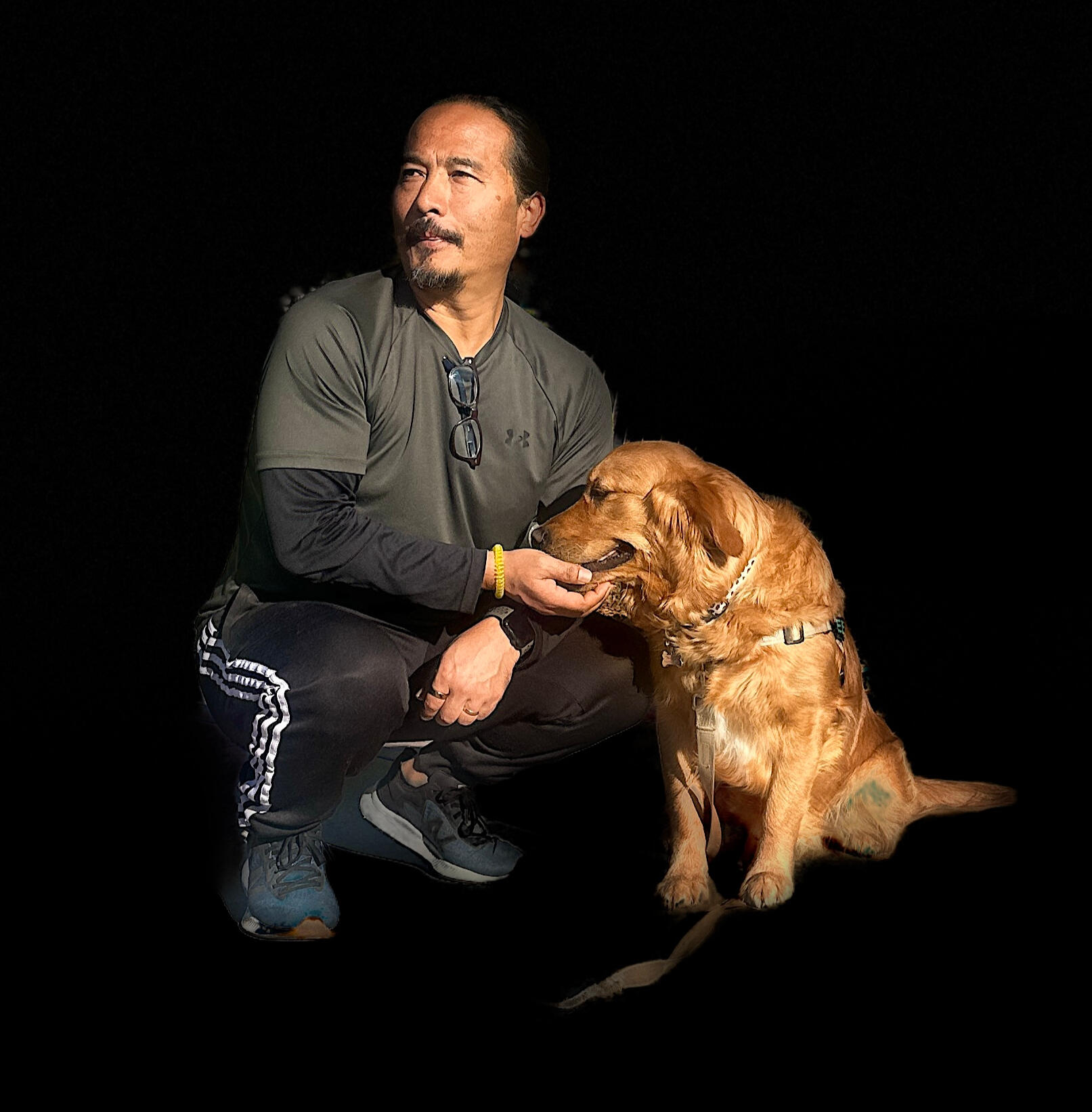
Hi, I’m Dipendra. I work with dogs and their people using force-free, reward-based methods that focus on trust, communication, and practical change. My perspective on training developed deeply through the ACT Companion Dog Club, where I now train as a course instructor, and through my ongoing study in animal behaviour and training.I’m currently completing a Certificate IV in Animal Behaviour and Training and hold both a National Police Check and a Working With Vulnerable People (WWVP) card, and am fully insured, giving you peace of mind that your dog is in safe, professional hands.My work includes puppy foundations, everyday manners, loose lead walking, recall, rescue dog adjustment, and behaviour support for challenges such as reactivity, barking, fear, frustration, over-arousal, and difficulty settling. Each session is tailored to your dog, your household, and the situations you are dealing with in real life.For in-person sessions, I can come directly to your home, where your dog is often most comfortable, or we can work in a nearby public space when that better suits the training goal. Working in real-life environments helps make the training practical, relevant, and easier to apply day to day.I also offer online sessions for clients who want personalised support from home or who are located outside Canberra. Online training can be useful for puppy guidance, behaviour support, troubleshooting specific challenges, and helping owners build a clear, realistic training plan.For me, training is not only about changing behaviour. It is about understanding the dog in front of us, supporting the person at the other end of the lead, and building a relationship based on trust, clarity, and calm.
Training Philosophy
My training philosophy is simple: training should support both ends of the lead.I use force-free, reward-based methods grounded in modern behavioural science and respect for each dog’s emotional wellbeing. This means looking beyond the behaviour itself and considering what the dog may be feeling, learning, and needing in that moment.I do not use punishment, corrections, aversive tools, intimidation, or balanced training methods. Instead, I focus on building trust, clear communication, and practical skills that can be used in everyday life.Whether we are working on puppy foundations, loose lead walking, recall, reactivity, fear, frustration, or settling at home, the goal is not only to change behaviour. The goal is to help dogs feel safer, more confident, and better understood while giving their people clear and kind ways to support them.This philosophy guides every session I deliver.
Services
Puppy Foundation –
A calm, clear start for puppies, covering early manners, confidence, settling, handling, and everyday routines.Learn more →
Rescue Dog Adjustment –
Support for newly adopted dogs as they decompress, build trust, and settle into a new home.Learn more →
Behaviour Support –
For dogs who bark, lunge, struggle to settle, or become overwhelmed by people, dogs, or daily life.Learn more →
Loose lead walking and recall -
Structured training walks focused on loose lead skills, engagement, sniffing, and calm real-world practice.Learn more →
Walk and Train -
Structured training walks focused on loose lead skills, engagement, sniffing, and calm real-world practice.Learn more →
Online Consultation -
Personalised training and behaviour support from home, wherever you are located.Learn more →
Puppy Foundation
For puppies who need a calm, clear start to life. Puppy training is not just about teaching cues. It is about helping your puppy feel safe, understand your home, build confidence, and learn the everyday skills that make life easier for both of you.This program can help with:
Toilet training, home routines, and settling into daily life
Puppy biting, chewing, jumping up, and early impulse control
Building calm focus around people, dogs, movement, and distractions
Teaching useful foundations such as name response, sit, drop, settle, and recall
Introducing lead skills so walks begin calmly and confidently
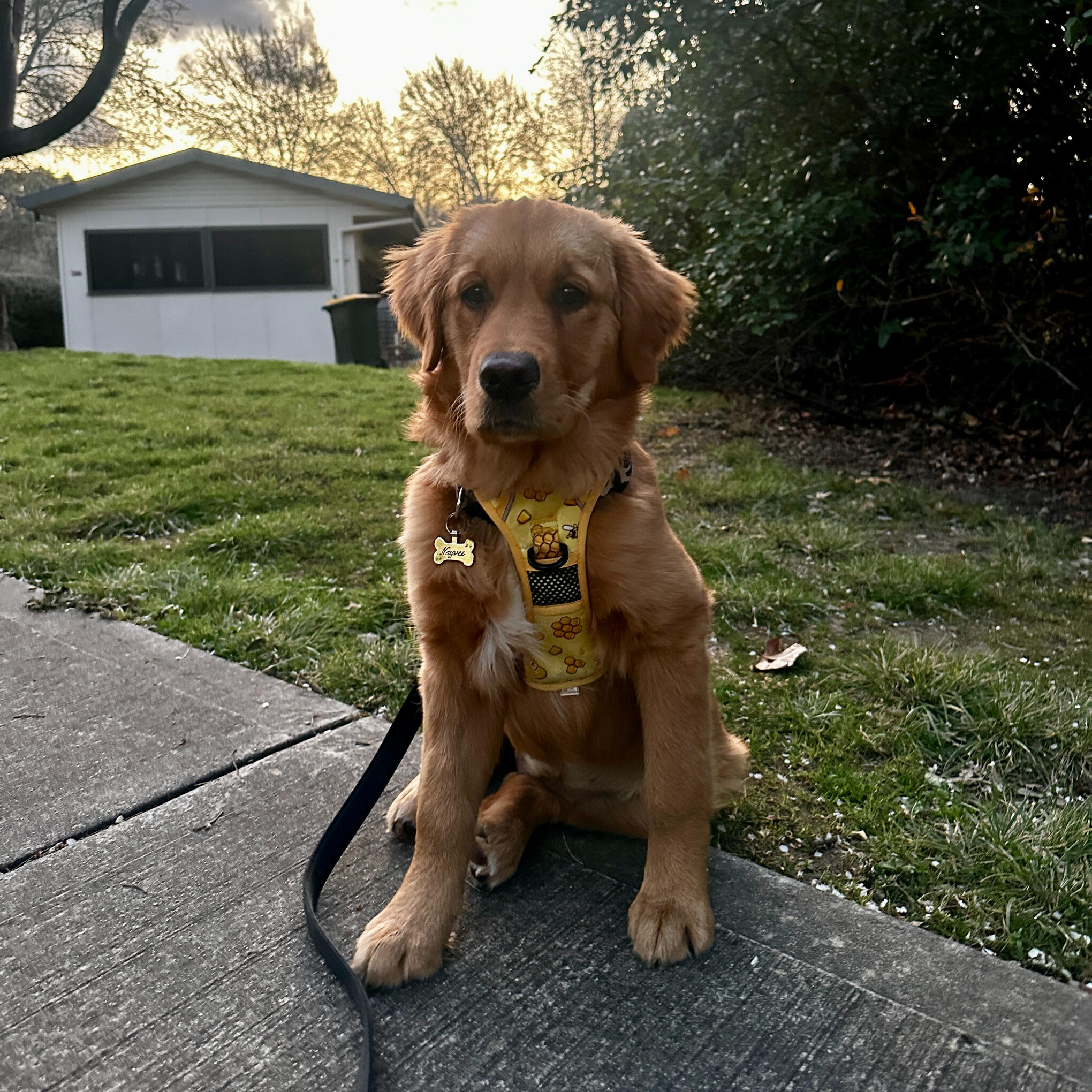
Sessions are tailored to your puppy’s age, temperament, and home environment. The goal is to help your puppy grow into a calmer, more confident, and well-adjusted dog.
Rescue Dog Adjustment
For newly adopted or rescue dogs who need time, structure, and support. Bringing home a rescue dog can be rewarding, but the early weeks can also feel uncertain. Some dogs settle quickly. Others need more time to decompress, feel safe, understand routines, and learn what is expected in their new home.This support can help with:
Settling in, and creating calm household routines
Building trust with people, spaces, and daily activities
Reducing overwhelm around visitors, doorways, walks, handling, or separation
Setting up management so your dog can succeed while they are still learning
Teaching practical foundations such as name response, settling, recall, and loose lead walking
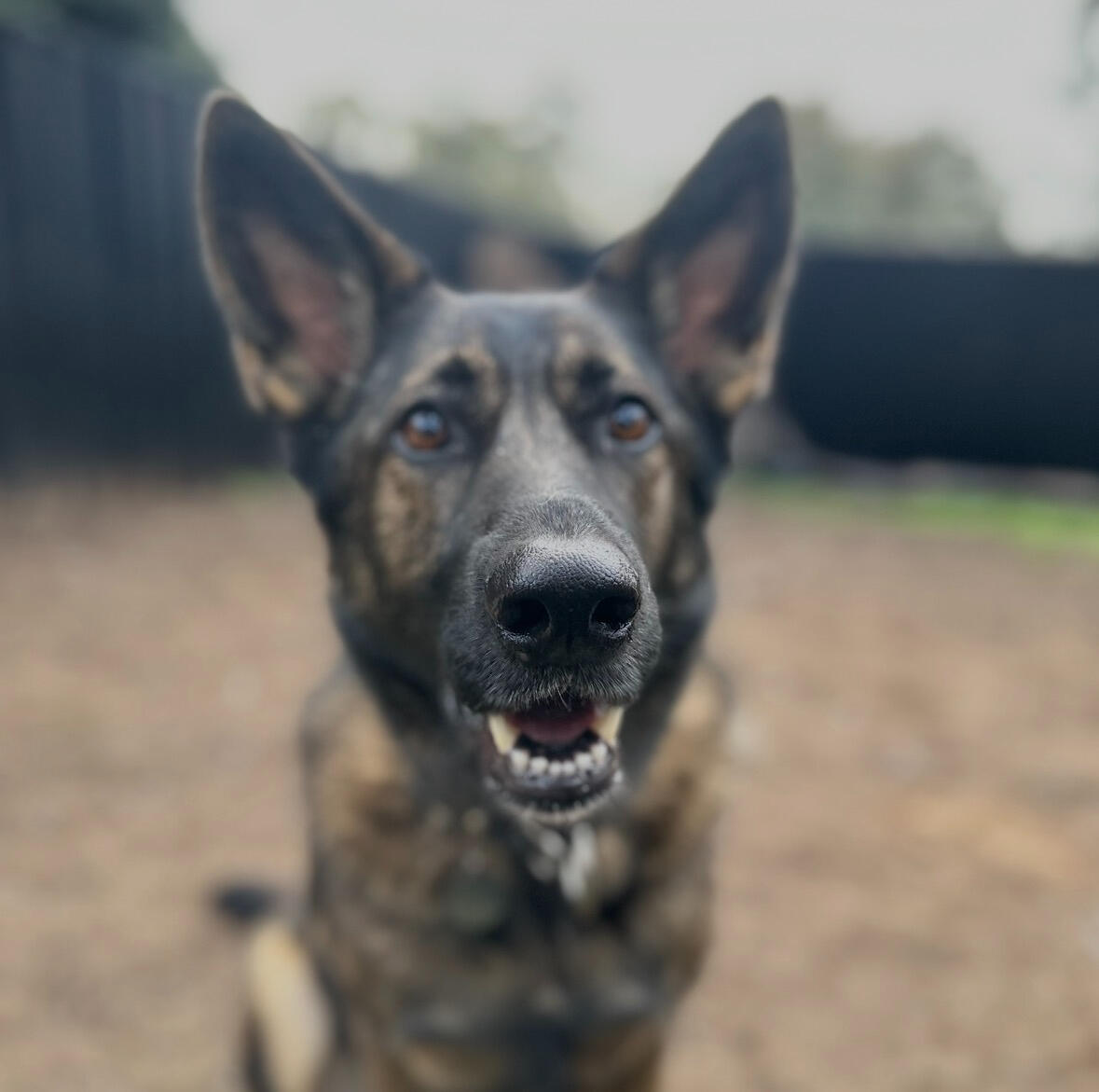
Sessions are tailored to your dog’s history, temperament, and current needs. The goal is to help your dog feel safer and more secure while giving you a clear, kind plan for moving forward.
Behaviour Support
For dogs who bark, lunge, struggle to settle, or become overwhelmed.
Behaviour support looks beyond obedience and asks why the behaviour is happening. We then build a practical, force-free plan to help your dog feel safer, cope better, and make daily life easier.This support can help with:
Barking or lunging at dogs, people, sounds or at home
Fear, nervousness, or low confidence in daily life
Over-arousal, frustration, jumping, or difficulty calming
Trouble settling at home, with visitors, or in public
Walks that feel hard, stressful, or unpredictable
Management strategies and training plans that reduce pressure while new skills are built
Sessions are force-free, reward-based, and tailored to your dog’s needs. The goal is to help your dog feel safer, think more clearly, and learn better ways to cope without punishment, corrections, or aversive tools.
Loose lead walking and Recall
For dogs who pull, rush ahead, or struggle to come back when called.
These sessions focus on calmer walking, better engagement, and recall foundations built gradually and safely.This support can help with:
Pulling, rushing ahead, or zig-zagging on walks
Building focus and check-ins around distractions
Teaching your dog to respond to direction changes
Recall foundations on lead or long line
Calm walking around people, dogs, traffic, and footpaths
Making walks feel more connected and enjoyable
The goal is not a rigid heel position for the whole walk. The goal is a dog who can enjoy the environment, respond to you, and move with you in a calmer, more connected way.
Walk and Train
For dogs who need guided practice on real walks.
Walk and Train sessions are structured training walks, not general dog walking. The focus is on helping your dog practise calm walking, engagement, and useful skills in real-life environments.This support can help with:
Pulling, rushing ahead, or becoming distracted on walks
Building focus and check-ins outdoors
Practising loose lead walking in real situations
Recall foundations on lead or long line
Calm observation around people, dogs, and movement
A walk that includes sniffing, enrichment, and training
These sessions can be useful for dogs who need more structure on walks, or for owners who want support building practical skills between regular training sessions.
Online Consultation
Online sessions can help with puppy guidance, behaviour support, household routines, and training plans. They are useful when the focus is on understanding what is happening and giving you clear steps to follow at home.This support can help with:
Puppy routines, toilet training, biting, jumping, and settling
Behaviour concerns such as barking, fear, frustration, or over-arousal
Home setup and management strategies
Training plans tailored to your dog and household
Troubleshooting specific challenges
Reviewing videos to better understand body language and training setup

Online consultations can be a practical way to receive personalised support wherever you are located, especially when you need a clear plan and guidance you can apply at home.
Testimonials
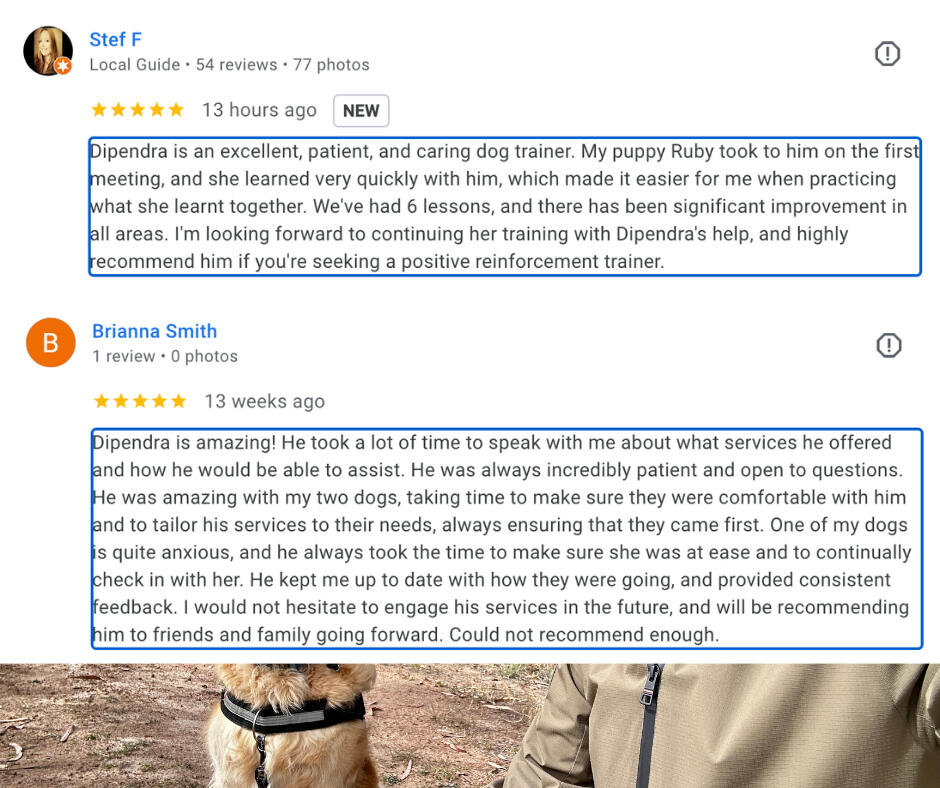
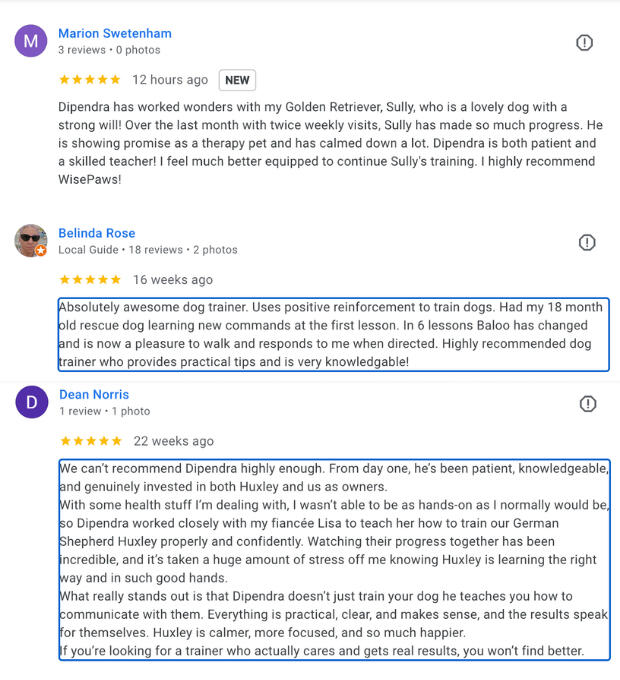
Contact
Every great journey with your dog starts with a conversation. Tell me a little about you and your dog below, and I’ll get back to you to discuss how I can help.
Thank you
Thanks for your message! I’ll fetch it right away 🐾 and get back to you as soon as possible.